Acrisure logo white
CONSTRUCTION RISK REPORT

Key Risks Impacting The Trades in 2026

As a trade contractor, your employees may be exposed to the most direct physical hazards and may be statistically more likely to experience workplace injuries. Adding to this risk is an influx of less experienced workers that may be more likely to get injured than their more seasoned counterparts.

When it comes to risk and insurance, the trades are facing increasing liabilities, in part due to general contractors’ efforts to transfer certain liability responsibilities to subcontractors.

What are some of the key risks facing The Trades?

  • Bodily Injury & Workplace Safety (OSHA Fatal Four): 
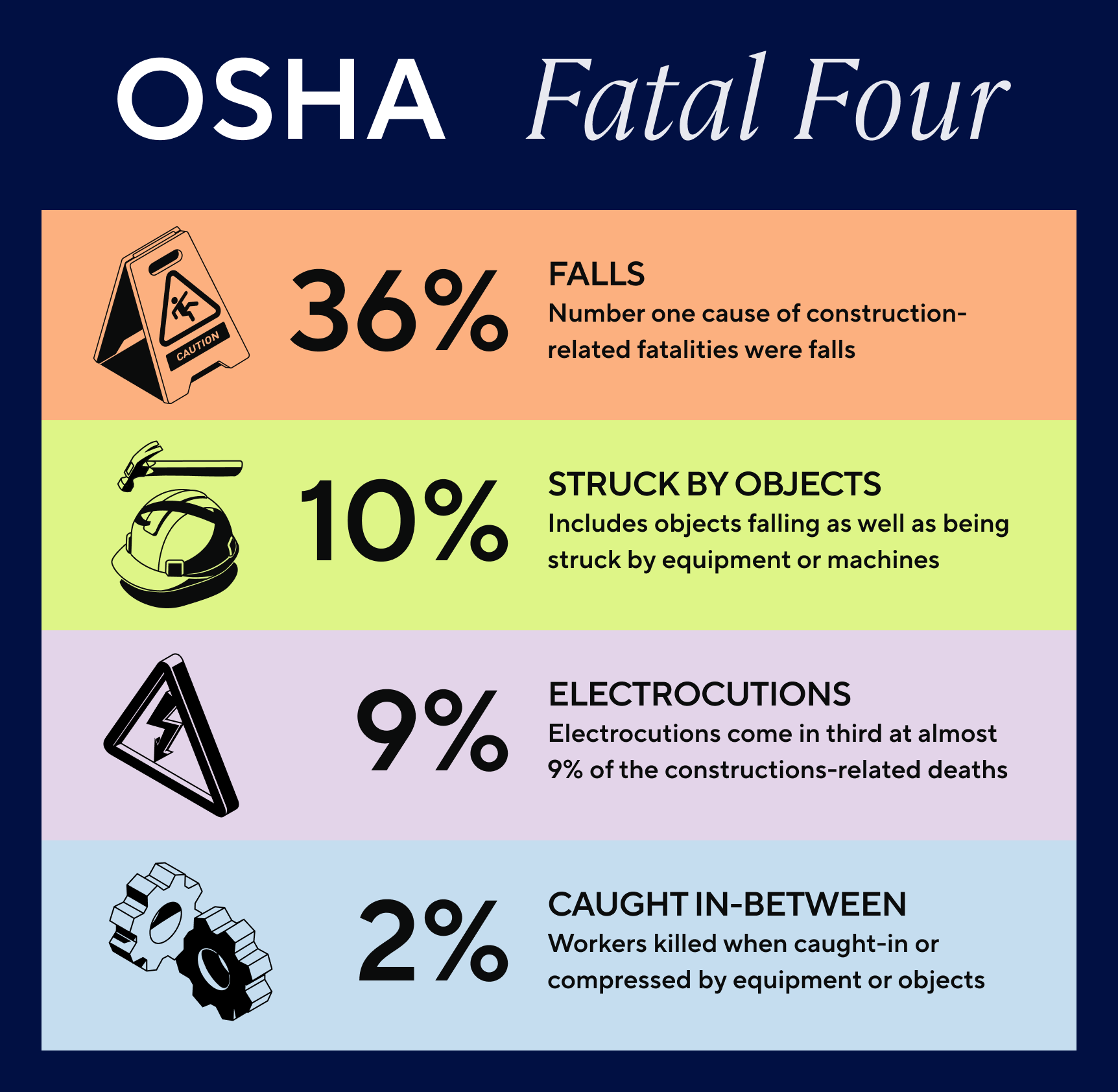
    The top four injury types - Falls, Struck-By, Caught-In/Between, and Electrocution - account for over 60% of all construction fatalities according to OSHA data. Due to the nature of their work, trades workers may face higher injury rates in certain segments of the industry. 

    TIP: Improving safety processes and culture may not only help reduce injury rates but may also help lower insurance costs, such as workers’ compensation claims.
     

    OSHA Fatal Four
  • Faulty Workmanship & Completed Operations Claims: 
    Substandard installation, improper technique, or incorrect use of materials can result in costly rework and third-party claims that may not surface until years after project completion. Broad indemnification clauses in contracts may require trades workers to defend general contractors even for the general contractor’s own negligence (subject to applicable law and contract terms).


    Completed operations claims are lawsuits or insurance claims filed against businesses—usually contractors or service providers—for bodily injury or property damage arising from faulty work that occurred after the project was finished. These claims arise away from the business’ premises and are generally covered under the "Products-Completed Operations" section of a Commercial General Liability (CGL) policy, subject to policy terms, conditions and exclusions. 

  • Fewer Insurance Options & Increasing Contractual Liability Risk: 
    High-risk trades such as roofers, steel erectors, and masons may see limited insurance capacity, steeper premiums, and stricter policy terms. This has often resulted in a heightened focus by insurers on a company’s safety performance, claims history, and complexity of work.

    Additionally, general contractors may be imposing more demanding insurance requirements and broader waivers of subrogation downstream to the trades, often with limited room for negotiation. This can put trades in a difficult position, with fewer insurance options and increasing liability requirements.
  • A Shrinking and Less Experienced Workforce: 
    As the construction industry faces a shrinking workforce, many companies are hiring less experienced employees to help fill roles. Studies suggest that inexperienced workers, may face higher risk of work-related injury, often due in part to unfamiliarity with hazards or safety protocols.

    As your workforce evolves, the burden of workforce training and safety education may increasingly shift to employers.

    TIP: Extra attention on new hires can help reduce claims and errors.

Common Insurance Consideration for Contractors

  • Policy Exclusions: 
    Many contractors might assume all job site incidents will be covered, but insurance policies often contain exclusions or limitations for certain situations, such as faulty workmanship, specific weather events, or particular materials. Depending on the circumstances, separate policies, endorsements or other risk management measures may be appropriate.
  • Underinsurance: 
    To manage costs, some contractors may select coverage limits that do not fully align with the scale or nature of their project risks, such as high-value or high-risk work.  If a significant claim occurs, policy limits may be insufficient to cover the full loss, potentially leaving the business reasonable for uncovered amounts.
  • Insurance Requirements For Complex Projects: 
    As projects become more complex, it can be important to evaluate whether insurance requirements align with contractual obligations and project-specific risks. When entering contracts with owners, general contractors or other project parties, understanding indemnity obligations, additional insured requirements and other risk transfer provisions can help support informed decision-making.
  • Contractual Risk Assumption: 
    General contractors and project owners may request specific insurance terms, endorsements, or waivers of subrogation from subcontractors. In some cases, subcontractors may accept contract terms that transfer more risk than anticipated.

    One area to review carefully is waivers of subrogation - these clauses may limit an insurer’s ability to seek recovery from certain third parties after paying a claim, subject to policy terms and applicable law.


    Download now: Key contract mistakes Subcontractors make with General Contractors

Common Insurance Coverages for The Trades

Trade contractors often carry unique and potentially high-severity insurance exposures. An insurance program should be designed to address the direct physical, contractual, and operational exposures of specialty subcontractors across all disciplines.
 

Commercial General Liability (CGL):
The foundation of many trade contractors’ insurance programs, Commercial General Liability coverage generally addresses third-party bodily injury and property damage claims arising from ongoing and completed operations, subject to policy terms, conditions and exclusions. Minimum limits of $1M per occurrence is commonly required under many project contracts, with some projects requiring higher limits.
 

Workers' Compensation & Employers' Liability:
Workers’ compensation generally provides statutory benefits for covered employees who suffer workplace injuries or illnesses, subject to applicable law. The cost of workers’ compensation coverage can be significant – and can be influenced by factors such as claims history, payroll, classification codes and safety performance.   Your experience Modifier (e-Mod) compares your performance to industry benchmarks and may affect  insurance premiums.
TIP: Managing your Experience Modifier may help improve workers’ compensation cost performance over time.  

Download now: Construction Company’s Guide to Workers’ Compensation


Commercial Auto Liability:
Commercial Auto Liability insurance generally helps address liability exposures arising from owned, hired, and non-owned vehicles, subject to the policy’s terms and coverage purchased.  Depending on the policy, this may include certain trailers and equipment haulers. If your employees use personal vehicles for work purposes, Hired & Non-Owned Auto is an additional coverage that should be considered.


Tools & Equipment / Inland Marine:
This coverage can help insure hand tools, power tools, small equipment, and materials while in transit or on job sites, subject to policy terms and conditions. Theft and vandalism of unattended tools is often among the most frequent claims for trades.


Contractor's Pollution Liability (CPL):
Contractor’s Pollution Liability coverage generally helps address bodily injury, property damage, and cleanup claims arising from covered pollution events caused by trade operations, subject to policy terms and conditions. This coverage can be an important consideration for HVAC (refrigerants), plumbing (chemicals), and roofing companies (adhesives/solvents).


Umbrella / Excess Liability:
To help address claims costs that exceed the limits of certain underlying policies, such as General Liability, Auto Liability, and Employers’ Liability coverages, Excess Liability coverage can provide additional limits up to a stated amount, subject to policy terms and conditions. General contractor contracts may often require excess liability limits up to $2M–$5M or more, particularly for especially for high-severity trades.

Insurance & Risk Assessment for Construction Companies

Contact us today to learn how Acrisure can help your construction company improve safety or learn more about our construction business solutions now.


IMPORTANT NOTICE: The opinions and statements herein are intended for general informational purposes only and should not be viewed as a substitute for any legal, regulatory or other advice on any particular issue or for any particular reason.  The advice of a professional should always be obtained before purchasing any insurance product or service, and you should not rely on the information provided herein for the prevention or mitigation of risks or as a full and complete explanation of coverage under any insurance policy or as a full and complete explanation of terms and conditions of any services offered.  Statistics and data referenced in this report are derived from industry sources and may not reflect current conditions or be applicable to your specific situation. Insurance coverage is subject to the terms, conditions, limitations, and exclusions of the applicable policy, and availability may vary by jurisdiction. Readers should consult with qualified legal, insurance, and financial professionals before making any decisions based on the information in this report. Acrisure disclaims any liability for actions taken or not taken based on this report.